
Sentinel Field Note #1
Why Military Heritage Deserves More Than Generic Merchandise
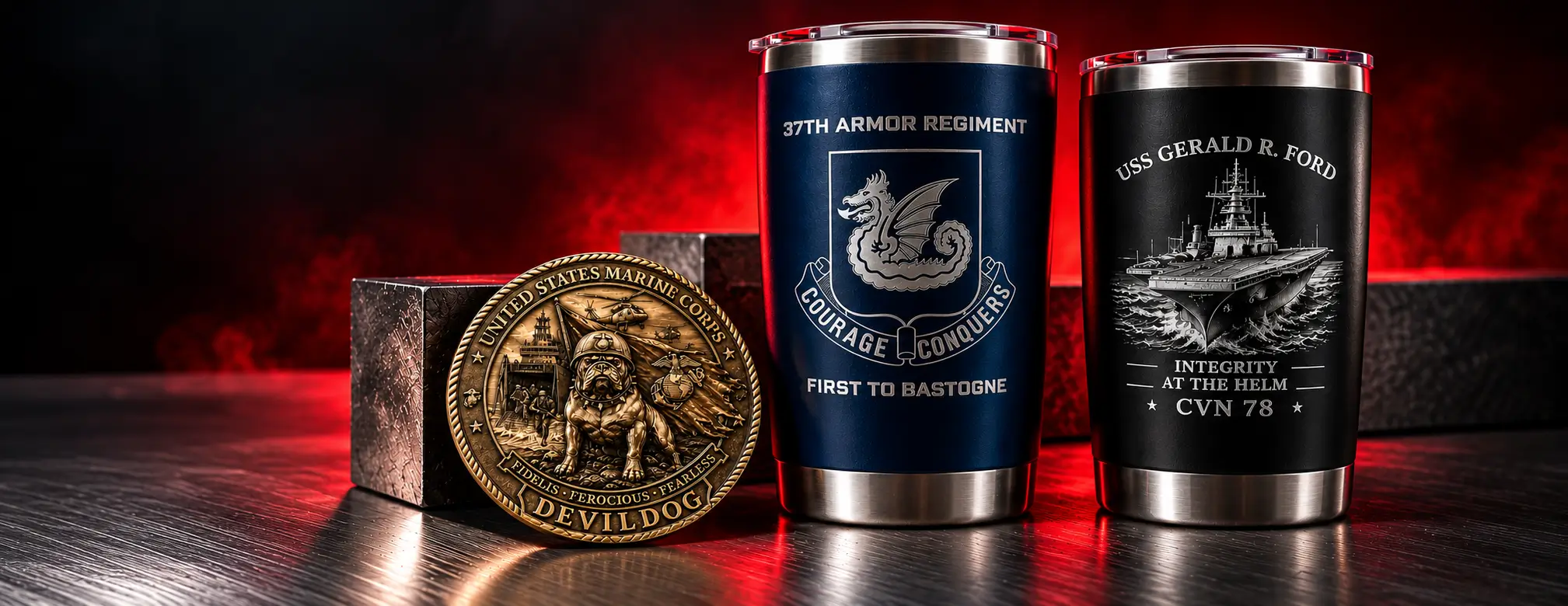
A military heritage gift should do more than look military. It should recognize something specific: a branch, a unit, a period of service, a promotion, a retirement, a deployment, or a bond formed through shared experience. The strongest meaningful military heritage gifts do not rely on broad patriotic imagery to create importance. They carry details the recipient can recognize as their own.
That distinction matters because military service is not generic. Two people may have worn the same branch insignia and still carry entirely different stories. Their units, assignments, specialties, leaders, friends, milestones, hard days, and inside jokes shaped what service meant to them. A gift that ignores those details may still be attractive. It is less likely to feel personal.
Recognition Comes Before Persuasion
The moment that matters is not when a buyer reads a list of features. It is when the recipient looks at the piece and thinks, “That’s my unit,” “Those were my years,” or simply, “They remembered.”
Recognition gives an object its weight. A name, rank, callsign, unit designation, date, or short inscription can connect a physical piece to a lived experience. Those details are not decoration added at the end. They are often the reason the object matters at all.
This is especially important when a gift marks a transition. Retirement closes one chapter. Promotion acknowledges responsibility earned. A permanent change of station can separate people who worked side by side. A reunion brings a group back to a shared point in time. In each case, the object becomes a marker: this happened, these people were there, and the experience deserves to be remembered.
Military-Inspired Is Not the Same as Personally Significant
Generic military-themed merchandise often begins with a category and stops there. It may use a branch name, camouflage, a flag, an eagle, or a familiar slogan. Those elements can signal a general association, but they do not automatically communicate a particular identity.
Personal significance comes from precision. Which unit? Which specialty? Which years? Which event? Who is the gift for, and what part of the story should it carry?
This does not mean every piece needs a crowded design or a long inscription. Restraint often creates more impact. A well-chosen emblem, a correctly written unit name, a service period, and one line known to the people involved can say more than a surface filled with symbols. The goal is not to include everything. The goal is to include what matters.
Craftsmanship Supports the Story
Meaning alone is not enough if the piece feels careless. Layout, legibility, proportion, material choice, and finish influence whether an object feels considered or disposable. Craftsmanship should serve the story by giving it a form worthy of being kept.
That begins with disciplined design. Important elements need room to breathe. Personalization should fit the composition instead of appearing as an afterthought. Type should remain readable at the finished size. Visual hierarchy should make the subject immediately clear. When official names or symbols are used, they should be handled carefully and reviewed for accuracy.
The standard is straightforward: the object should feel deliberate. It should look as though someone understood why it was being made.
Authenticity Requires Specificity—and Restraint
Authenticity is not created by making a design louder. It comes from respecting what the imagery and language represent.
Military organizations have distinct identities, traditions, terminology, and symbols. Those details should not be treated as interchangeable. A motto should not be used because it sounds impressive. A unit name should not be shortened or altered casually. A historical claim should not be repeated without verification. When the facts are uncertain, it is better to confirm them than to build a design around an assumption.
Restraint is equally important. Not every military gift needs an explosion of flags, weapons, slogans, and distressed graphics. A disciplined composition can communicate confidence without exaggeration. The service story already carries weight. The design does not need to manufacture it.
A Physical Object Can Carry More Than Its Function
A tumbler, glass, coin, plaque, or other engraved piece has a practical form. Its lasting value, however, often comes from what the form carries.
It can hold a unit identity that was once worn every day. It can preserve dates that divide one chapter of life from the next. It can record the names of people who served together. It can become part of a retirement desk, a home bar, a reunion table, or a family collection. Over time, the object may become a prompt for stories that would otherwise remain unspoken.
That is the difference between an object selected only by category and one built around a person. One says, “You served.” The other says, “I know where you served, what you did, and why it mattered.”
What to Look for in a Meaningful Military Heritage Gift
Before buying, ask a few practical questions:
- Does it identify the recipient’s actual connection? Look beyond the branch to the unit, community, specialty, assignment, or occasion.
- Can the personalization carry real meaning? A name is useful. A name combined with rank, years, unit, or a concise inscription may tell a fuller story.
- Is the design controlled and readable? More elements do not automatically create more meaning.
- Are names, symbols, and historical references accurate? Confirm details when authenticity matters.
- Will the recipient recognize themselves in it? This is the central test.
Built to Carry the Story
Sentinel LaserArt approaches military heritage as identity made physical. The purpose is not to add another generic item to a shelf. It is to create something connected to service, memory, and belonging—something specific enough to be recognized and substantial enough to be kept.
The official Sentinel LaserArt online-store launch is 24 October 2026. Explore pieces built to recognize the unit, the name, the dates, and the story behind them.
Browse Sentinel LaserArt products
Frequently Asked Questions
What makes a military heritage gift meaningful?
A meaningful gift connects to the recipient’s actual service story. Accurate unit or branch identity, relevant dates, rank, name, specialty, or a personal inscription can turn a general military-themed object into something the recipient recognizes as their own.
Does a military gift need extensive personalization?
No. A few precise details often carry more weight than a crowded design. Choose the details most closely tied to the person and occasion, then keep the composition clear.
What details should I confirm before ordering?
Confirm the spelling of names, rank at the time being recognized, unit designation, service dates, and any requested inscription. If the design uses a specific emblem, motto, or historical reference, confirm that it is appropriate and accurate.
Are all military-themed gifts official or licensed products?
No. Military-themed presentation does not by itself establish official status, endorsement, or licensing. Review the seller’s product information and any stated licensing details before making that assumption.