
Product Sheet
US Army Chemical Corps Challenge Coin
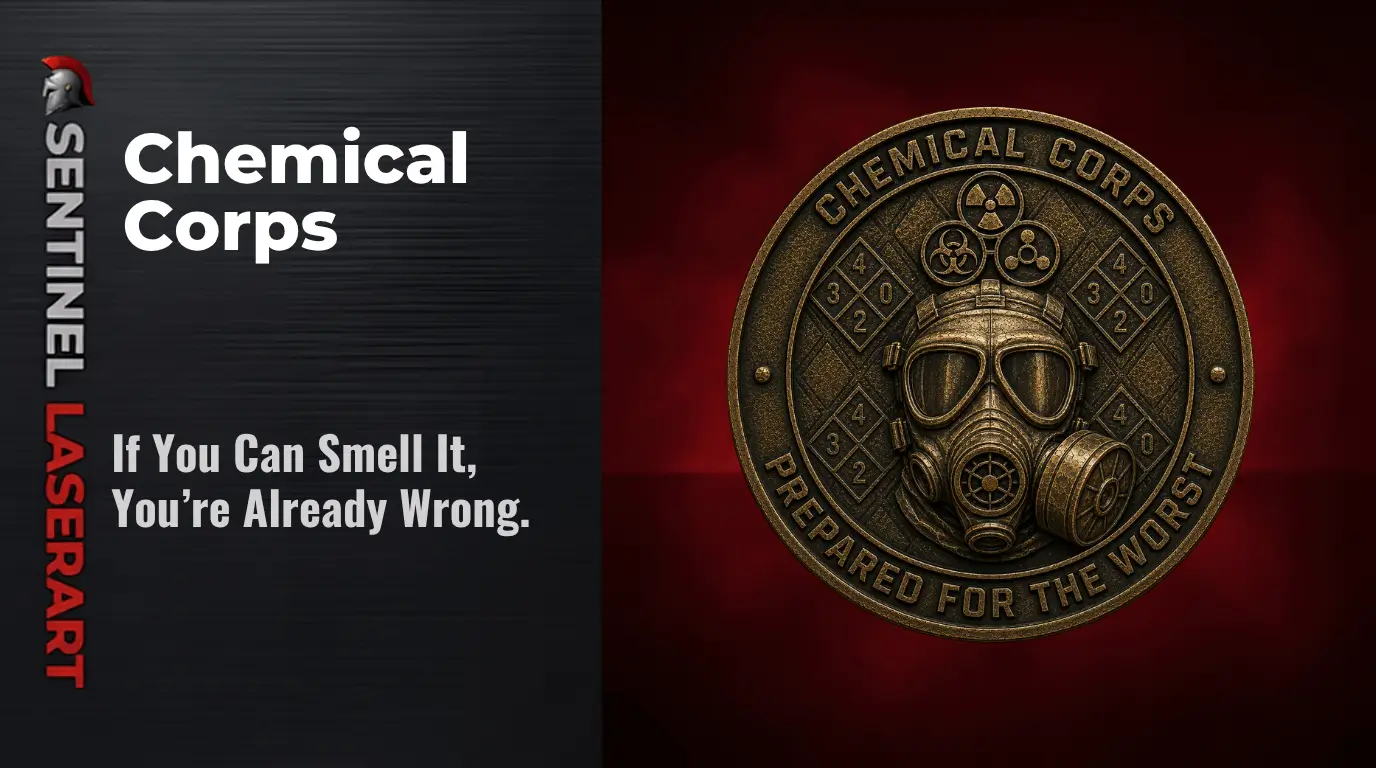
Prepared for the Worst
_x000D_
Some military specialties train for situations everyone expects.
_x000D_
The Chemical Corps trains for the ones everyone hopes never happen.
_x000D_
The Chemical Corps challenge coin honors the Soldiers responsible for chemical, biological, radiological, and nuclear preparedness—the professionals expected to understand the hazard, protect the force, and help a unit continue operating when the environment becomes part of the problem.
_x000D_
Their job begins long before an incident occurs.
_x000D_
_x000D_
- _x000D_
- Training.
- Detection.
- Protection.
- Decontamination.
- Assessment.
- Warning.
- Planning.
_x000D_
_x000D_
_x000D_
_x000D_
_x000D_
_x000D_
_x000D_
_x000D_
CBRN defense is built around preparation because once the threat is present, figuring things out from scratch is a particularly poor strategy.
_x000D_
Chemical Corps Soldiers are trained to operate in environments where contamination, toxic industrial hazards, biological threats, radiological exposure, and other CBRN conditions can alter an entire operation.
_x000D_
When everyone else sees a warning symbol, they see information.
_x000D_
When everyone else reaches for the manual, they are expected to already know what comes next.
_x000D_
Because CBRN operations are rarely convenient.
_x000D_
_x000D_
- _x000D_
- Protective equipment limits visibility.
- Masks complicate communication.
- Heat becomes harder to manage.
- Simple tasks become slower.
- Equipment must still function.
- Leadership must still happen.
_x000D_
_x000D_
_x000D_
_x000D_
_x000D_
_x000D_
_x000D_
The mission does not disappear simply because the environment has become hostile.
_x000D_
The force adapts.
_x000D_
And somebody has to know how.
_x000D_
Chemical Corps Soldiers rarely receive the same visibility as tankers, Aviators, Infantrymen, or Artillerymen, at least not until something goes wrong.
_x000D_
Then suddenly everybody becomes extremely interested in the chemical officer.
_x000D_
That is part of what makes the profession distinctive.
_x000D_
Its effectiveness is often measured by what never happens.
_x000D_
_x000D_
- _x000D_
- A unit remained protected.
- Contamination was identified.
- A hazard was avoided.
- Protective measures worked.
- The formation kept moving.
- The mission continued.
- There may not be dramatic photographs afterward.
_x000D_
_x000D_
_x000D_
_x000D_
_x000D_
_x000D_
_x000D_
_x000D_
That is generally considered a successful outcome.
_x000D_
_x000D_
Built for CBRN Professionals
_x000D_
This Chemical Corps challenge coin is designed for Chemical Corps Soldiers, CBRN specialists, 74-series personnel, veterans, retirees, instructors, leaders, and anyone whose service centered on protecting the force against unconventional hazards.
_x000D_
It works especially well as a keepsake for:
_x000D_
_x000D_
- _x000D_
- Chemical School graduation,
- promotion,
- PCS,
- reenlistment,
- deployment,
- retirement,
- unit recognition,
- career milestones,
- CBRN training accomplishments,
- or as a gift from teammates who spent entirely too much time together wearing protective masks.
_x000D_
_x000D_
_x000D_
_x000D_
_x000D_
_x000D_
_x000D_
_x000D_
_x000D_
_x000D_
_x000D_
Because Chemical Corps Soldiers understand something the rest of the Army occasionally forgets:
_x000D_
The worst time to learn how your protective equipment works is when you actually need it.
_x000D_
Adapt and overcome.
_x000D_
Prepared for the worst.
_x000D_
If you can smell it, you’re already wrong.